CPA CPE Requirements: Maintaining Your License
Compare state reporting periods, plan your remaining hours, and keep the evidence you need for renewal.
CPA CPE requirements are set by your licensing board. Continuing professional education supports ongoing competence, but there is no single national hours rule. Check your license status, reporting period, annual minimums, ethics, accepted courses, and documentation before planning a renewal.
Planning ahead while you study for the CPA Exam?
Keep your exam preparation moving as you learn what comes after licensure. The CPAPass practice resources on this page are for CPA Exam study and are not offered for CPE credit.
Practice and learn for your next exam section
Build your understanding with CPA Exam questions and explanations on CPAPass. Start with a free account.
Start Practicing FreeCPE, exam preparation, and initial ethics: three different jobs
CPE means continuing professional education: qualifying learning that maintains or develops professional competence. A contact hour often uses a 50-minute basis, as the New York board explains. Follow the credit awarded for an accepted activity instead of converting every hour spent reading or watching videos into CPE.
Prepare
CPA Exam learning
Study the tested knowledge and practice applying it before your next exam section. A study session does not automatically create CPE credit.
Explore exam practiceQualify
Initial-license ethics
Complete the specific course or assessment your board requires for an initial license. This step varies by jurisdiction and is separate from the Uniform Exam.
Check the ethics stepMaintain
Renewal CPE
Meet the education conditions for your existing license or registration. Ethics CPE, technical hours, and reporting dates can each have different rules.
Find your boardHow many CPE hours do CPAs need?
Start with the period, then the total. An annual renewal date does not necessarily mean an annual CPE total, and a multi-year total can still contain annual minimums. These selected state examples show the differences. They summarize ordinary active-status requirements; first renewals, service-specific rules, nonresident provisions, and status changes need a separate check.
Swipe across to compare every column.
| State | Hours and period | Ethics | Check before renewal |
|---|---|---|---|
| New York | 24 or 40 hoursEach calendar year24 in one recognized subject area, or 40 across recognized areas. | 4 hours every 3 calendar years | The annual learning requirement is separate from the registration period. Check NY-specific ethics acceptance. |
| Pennsylvania | 80 hours / 2 yearsJan 1, 2026 - Dec 31, 2027At least 20 hours in each calendar year. | 4 hours per reporting period | Attest work adds subject requirements. Self-study and authorship share a limit of 40 hours. |
| California | 80 hours / 2 years2 years before license expirationEach year: 20 hours, including 12 technical. At least 40 technical hours overall. | 4 hours per renewal period | Regulatory Review is a separate 2-hour course when due. First renewals and certain services have additional rules. |
| Texas | 120 hours / 3 years3-year CPE requirement; annual renewalRenewal is due by the last day of the licensee’s birth month. | 4 Board-approved hours every 2 years | Use the annual portal to confirm the applicable CPE balance and any nonresident ethics exception. |
Board sources checked . Select a state name to read its official instructions. This is a comparison of four examples, not a complete 50-state compliance table.
Why “40 hours a year” can lead to the wrong plan
Dividing a multi-year target by the number of years can be useful for scheduling, but it does not replace the legal rule. A person can reach an overall total and still miss a particular year’s minimum, an ethics deadline, or a required subject. Conversely, New York’s single-subject option is different from a flat 40-hour requirement. Keep each condition visible in your own record.
Turn your board’s requirements into a study plan
Plan the hours still to complete
The starting values are an example. Enter your board’s targets and accepted credits for the same reporting period. Include ethics credits in the completed total. Values reset on reload.
Ethics can be part of the remaining total; do not add the two balances together.
This arithmetic does not determine compliance. Check annual minimums, technical or attest hours, course acceptance, date windows, carryover, and first-renewal rules separately. If ethics uses a different period, calculate it separately.
For candidates still preparing for the CPA Exam
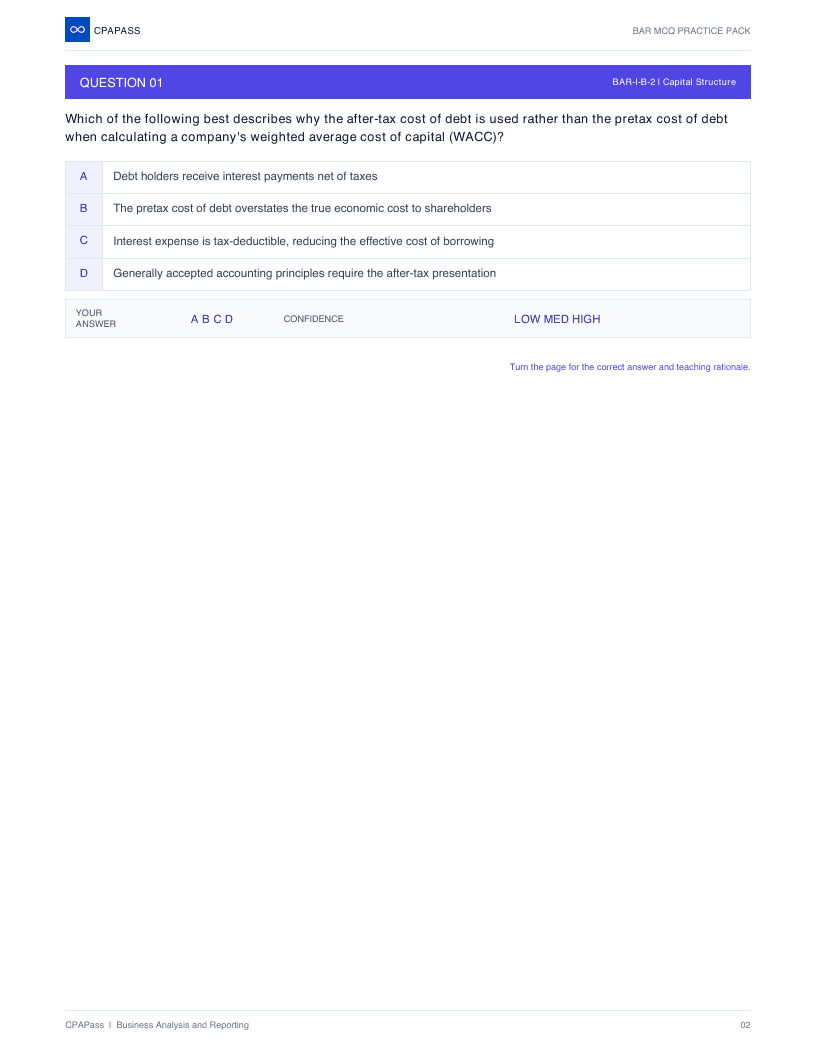
Still preparing? Get six free CPA Exam MCQ PDFs.
Leave your email for practice questions covering AUD, FAR, REG, BAR, ISC, and TCP. Keep a question set ready for your next study session.
These PDFs support CPA Exam preparation. They are not offered for CPE credit and do not satisfy a board’s ethics-course requirement.
Current CPE updates worth checking
Course delivery and renewal procedures change as well as technical content. Check the effective date and who the change applies to before carrying an old assumption into a new reporting period.
New program standards have phased dates
NASBA and AICPA approved revised CPE program standards, generally effective August 1, 2026 unless a licensing body establishes otherwise. Sponsor applications, new programs, and existing programs have different implementation dates.
This is a program-quality and delivery update. Continue to verify the hours and accepted activities required by your board.
Read NASBA’s transition noticeSimpler reporting still needs evidence
From January 2026, California asks licensees to certify applicable CE completion at renewal rather than enter specific coursework details. The board also says to retain CE records for four years for possible audit.
A streamlined renewal form does not remove the obligation to complete and document the required learning.
Read the California CE referenceCheck more than the headline total
Before buying a course, match its certificate and syllabus to the category you actually need. An interesting tax update may not fill an accounting-and-auditing shortfall. General professional development may not count as technical education. A course described as ethics may still lack the state-specific approval your board requires.
Dates and annual floors
Record the start and end of each reporting period, any annual minimum, and the actual renewal deadline. Check the first-renewal rule when a license is newly issued.
Ethics and technical mix
Track professional ethics, state regulatory review, technical subjects, and any attest or industry-specific requirement separately. Confirm which credits also count toward the total.
Formats and limits
Check accepted delivery methods, provider approval, self-study limits, teaching or publication caps, and any carryover restrictions. A sponsor logo alone is not enough.
For example, Pennsylvania’s renewal instructions cap combined self-study and preapproved authorship at 40 hours and require 24 accounting and attest/auditing hours for licensees who participate in attest activity. These are separate checks within the reporting period, not alternative ways to ignore the total.
Which courses and learning formats can count?
Use the NASBA National Registry of CPE Sponsors and your board’s own provider rules as starting points. Confirm the exact sponsor, course, delivery method, subject category, credit amount, and completion requirements. Approval for one program or method does not establish acceptance of everything a provider sells.
Swipe across to compare every column.
| Format | Before enrolling | Evidence to retain |
|---|---|---|
| Live webinar or classroom | Accepted provider, subject, contact time, and attendance or polling rules. | Completion certificate and any attendance record required by the board. |
| Self-study | Accepted program, assessment requirements, awarded credits, and any format cap. | Certificate identifying the course, completion date, credits, and delivery method. |
| College course | Qualifying subject, institution, credit conversion, and whether repeated content counts. | Official transcript and course description if needed. |
| Teaching or authorship | Whether the activity qualifies, preapproval, preparation allowances, and category limits. | Approval, publication or teaching record, and the basis for credits claimed. |
How to choose useful topics without chasing a course label
Start from the work you perform. A reporting role may call for accounting-standard updates; tax work may call for current compliance and planning; a controls role may call for cybersecurity, systems, or data-analysis training. Then verify the board’s classification and acceptance. “AI,” “analytics,” or another current topic in a title does not by itself make a course technical CPE.
Save a specific learning objective before enrolling: a rule you need to apply, a control you need to evaluate, or a process you need to understand. After the course, record the credit separately from what you plan to use at work. Professional usefulness and regulatory acceptance are related questions, but both need an answer.
Build a record you can use at renewal
Log a course when you complete it. Keep the certificate in a folder for the reporting period, then record the fields below in a spreadsheet or approved tracking system. Reconcile the records with the board’s portal before submitting a renewal. If a provider corrects a certificate, keep the corrected version and a clear note of what changed.
Swipe across to compare every column.
| Record | What to capture | Why it matters |
|---|---|---|
| Course identity | Title, sponsor, sponsor number where relevant, and delivery method. | Lets you trace the activity to an accepted provider and format. |
| Date and credit | Completion date and credits actually awarded. | Assigns the course to the correct reporting period and annual minimum. |
| Subject allocation | Ethics, technical, accounting/auditing, or another required category. | Prevents a total-hours balance from hiding a category shortfall. |
| Supporting proof | Certificate, transcript, approval, or other required evidence. | Supports an audit or a request to clarify a claimed activity. |
Retention periods vary: New York requires at least five years of certificates, while the California reference says four years. Use the applicable board period and consider any longer employer or other professional requirement. A course purchase receipt alone does not show successful completion.
What if you are short or miss a deadline?
Identify the exact shortage before contacting the board: total hours, one year’s minimum, ethics, a restricted delivery method, or missing proof. Ask about the published correction, extension, hardship, or status-change process that applies to your circumstances. Do not assume a grace period, and do not certify completion for credits you have not earned.
Missing hours versus missing certificates
If learning is incomplete, establish which accepted activities can fill the gap and whether the board has an applicable relief process. If learning was completed but proof is missing, ask the provider for a replacement certificate with the original completion details. Do not change dates or reconstruct credits from memory. Keep the correspondence with your renewal records.
When an audit or deficiency notice arrives
Read the response deadline, requested documents, and submission channel. Reconcile each claimed course with its evidence, identify any mistake honestly, and use the board’s correction procedure. Consequences depend on the jurisdiction and facts; a generic national fine estimate is not a reliable guide to your case.
Active, inactive, and returning to practice
Leaving a job does not automatically change your license status. Confirm the status options your board offers, what work and title use each permits, whether approval is required, and what education is needed to return. Do not assume that “inactive” and “retired” mean the same thing across states.
Keeping active status
Follow the renewal and CPE rules for your current license and the services you perform. Check additional obligations when you hold multiple licenses.
Requesting another status
Confirm eligibility, filing steps, restrictions, and any remaining renewal or education duties before you stop tracking requirements.
Returning to practice
Read the reactivation rule before accepting work that requires active status. The relevant lookback period and required learning may differ from normal renewal.
CPA continuing education questions
How many CPE credits does a CPA need?
There is no single national total. Your board sets the reporting period, total hours, annual minimums, ethics and subject requirements. The state examples above show why 40 hours a year is not a complete rule.
Do free webinars count as CPA CPE?
They can, if the provider, subject, delivery method, participation and completion record meet your board’s rules. A free price or a sponsor logo alone does not establish acceptance.
Can CPA Exam practice count toward CPE?
Do not assume exam preparation earns CPE credit. The CPAPass platform practice and free MCQ PDFs offered on this page are CPA Exam study resources and are not offered for CPE credit.
Can I carry extra CPE hours into the next period?
Only if your board explicitly permits it, within its limits. Check the completion date and category restrictions before treating surplus hours as credit for another period.
When does CPE start for a new CPA?
The issuing board sets the first reporting period and any first-renewal adjustment. Confirm the start date when your license is issued; passing the exam alone does not establish a national CPE start date.
Choose the next step for your stage
If you already hold a license, open your board’s current renewal instructions and record the next reporting deadline. If you have passed the exam but are awaiting a license, use the initial CPA license checklist. If an exam section remains, use CPA Exam practice questions alongside your study plan. For cross-state work, review CPA mobility and reciprocity and the relevant boards’ rules.