Getting Your CPA License After Passing the Exam
Passing the Uniform CPA Examination completes the exam milestone. Your jurisdiction still decides whether your education, experience, ethics, and application qualify for a license.
Getting a CPA license is a separate legal and administrative milestone from passing the exam. A passing result satisfies the examination component. It does not by itself prove that you meet the issuing jurisdiction's education pathway, experience rule, ethics requirement if any, or final application conditions.
Still completing CPA Exam sections?
Plan your license requirements while you prepare. CPAPass can support the exam work. It cannot tell the board that your education or experience qualifies.
Keep your next exam section moving
If you still have an exam section left, practice and learn with CPA Exam questions and explanations on CPAPass.
Start Practicing FreeFrom a passing score to an issued license
Swipe across to compare every column.
| Milestone | What it establishes | Your next evidence |
|---|---|---|
| Exam passed | The examination component is complete. | Confirm score records and the remaining license requirements. |
| License issued | The board has approved your application under its rules. | Save the license number, active status, permitted title use, and expiration date. |
| License maintained | You meet the continuing conditions for the status you hold. | Track renewal, CPE, ethics, and any practice-specific obligations. |
Use the title only after the responsible board has issued the license and you have confirmed its status and hold-out rules. Until then, describe the objective fact, such as "passed all four CPA Exam sections," without presenting yourself as licensed. Rules for labels such as "CPA candidate" can also be jurisdiction-specific.
Passing is not issuance
1. Open the correct initial-license checklist
Start with the jurisdiction that will issue the initial license. Do not reuse the exam-eligibility page or assume the exam processor also receives the licensing application. The NASBA initial-licensure overview and state-board directory help you find the authority, but the board's current rule and application control.
Create separate rows for education, experience, verifier, ethics, background disclosures, documents, fees, and application destination. Add the source URL, date reviewed, effective date, and your evidence for each row. This guide's national sources were reviewed on ; your application must use the rule in effect for your jurisdiction and filing date.
2. Recheck the license education pathway
Do not assume that passing under one education threshold means the licensing threshold is complete. The 150-hour route remains common, but current jurisdictional alternatives make "150 hours everywhere" inaccurate. The NASBA pathway map is orientation only. Confirm whether your board uses a 150-hour route, an alternative education-and-experience route, a future-effective route, or a transition rule.
What is changing in CPA licensure?
Alternative pathways make effective dates part of your plan. These two board notices, checked September 15, 2026, illustrate how education and experience can be paired differently. They are examples, not a national eligibility rule. Passing the CPA Exam and the board’s other conditions still apply.
Texas: Pathway B
The route pairs specified 120-hour education with 24 months of full-time, directly supervised qualifying experience. Part-time work has its own hour and duration rules.
Maryland: an additional route
The board describes a bachelor’s degree with an accounting concentration, 120 credits, and two years of relevant supervised experience. This route cannot be used before its effective date.
3. Complete and document qualifying experience
Experience rules vary by pathway and jurisdiction. The board may measure years, hours, or both; define acceptable public, industry, government, or academic work; and impose a particular relationship between the applicant and verifier. Do not convert "one year" into 2,000 hours or assume that every verifier must be your direct supervisor unless the controlling rule does so.
What Counts as Experience?
Use the board's definition of qualifying work. Job title alone does not prove that the duties, duration, or pathway qualify.
Who Can Verify It?
The verifier's license status, jurisdiction, knowledge of your work, and supervisory relationship must match the board's rule and form.
Part-time, remote, or unusual experience
Compare the board’s current form with your duties, dates, hours, employment setting, and reporting relationship. Ask whether part-time work is accepted, how it is measured, and what a remote supervisor must document. Keep a record of who reviewed your work and where the verifier was licensed.
If the rules do not clearly cover your role, ask the board a narrow written question before relying on the experience. Describe the work without confidential client information. An employer’s assurance or a familiar job title cannot replace the board’s determination.
For candidates still preparing for the CPA Exam
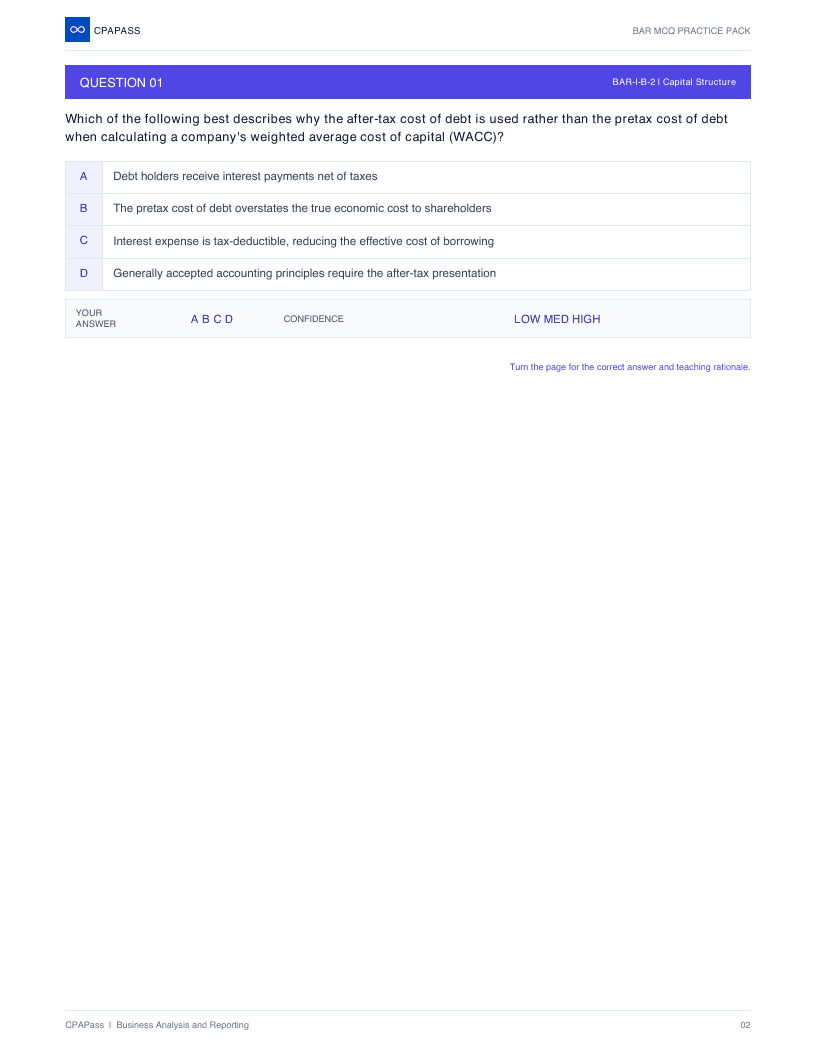
Keep free MCQs beside your license plan.
Still studying? Leave your email to receive six CPA Exam MCQ PDFs, covering AUD, FAR, REG, BAR, ISC, and TCP. Use the questions to keep learning while you organize your future application.
These are CPA Exam practice questions. They do not replace a board-required ethics course or licensing document.
4. Complete ethics only if your authority requires it
Ethics requirements are not uniform. A jurisdiction may name an AICPA course, a board-authored exam, a state-law course, another provider, or no separate pre-license ethics exam. The Uniform CPA Examination's professional-responsibilities content does not replace a board requirement unless the board says it does.
The phrase AICPA ethics exam commonly refers to the assessment inside AICPA's Professional Ethics comprehensive online course for licensure. It is separate from the Uniform CPA Exam. Completing it counts toward initial licensure only when the issuing board accepts or requires that course.
NASBA's licensure-organization overview explains that state boards issue CPA licenses, while its candidate FAQ directs candidates to jurisdiction-specific requirements. Use those resources to reach the board, then let the board's current instruction control the ethics decision.
| Fact | What the official course page says | What the applicant must still verify |
|---|---|---|
| Format | Online course with an assessment | Whether this exact course satisfies the board's rule |
| Access | One year of digital access | When to complete it relative to the application |
| Course credit | 8.5 credits | Whether the board asks for course credit, an exam result, or another record |
| Licensure score | At least 90 percent on this AICPA course assessment | The board's accepted provider and passing standard |
| Acceptance | The page warns that many states do not accept the course | The current jurisdiction rule before purchase |
Use a board-first ethics decision flow
1. Find the board
Use the NASBA directory to open the issuing board, not a generic course seller.
2. Read the current rule
Identify whether a separate pre-license ethics step exists for your exact pathway.
3. Match the product
Confirm provider, course title, score, timing, and reporting instructions before paying.
4. Save the evidence
Keep the completion record and confirm that the board received the required result.
Three jurisdiction scenarios
| Board instruction | Candidate action | Do not assume |
|---|---|---|
| The board names the AICPA licensure course | Use the named product and follow its reporting instructions | That another state's timing or certificate rule also applies |
| The board names a state-specific course or exam | Follow the state instruction instead of substituting the AICPA course | That a 90 percent AICPA score satisfies the state product |
| The checklist lists no separate ethics assessment | Confirm the current checklist and complete the requirements it actually names | That every jurisdiction requires a separate pre-license ethics exam |
Is there a free AICPA ethics exam PDF?
- Provider: Buy only the exact product named by the licensing authority.
- Score and attempts: Record the board's passing standard, retake rule, and certificate-validity period.
- Delivery: Confirm whether the provider reports directly or whether you upload a certificate.
- Timing: Do not complete a course too early if the certificate can expire before application review.
Who signs off on experience?
Ask this question before accepting a role or changing supervisors. Download the current form and identify what the verifier must attest: dates, hours, duties, competencies, supervision, license number, and license status. If the verifier leaves, retires, or refuses to sign, contact the board for its documented alternative instead of inventing one. Keep engagement descriptions and reporting lines while the work is fresh.
If you have not started testing, first align CPA exam requirements with this future licensing checklist. If you are still completing sections, the current exam blueprints and free CPA practice questions support exam preparation. They do not establish qualifying experience or complete board paperwork.
5. Submit the board's required application
Submit only when each requirement for your pathway is supported. The destination and document set vary. Your board may already hold exam scores or education records, require a separate score transfer or updated evaluation, or delegate part of the process. Follow the current official form rather than this general checklist.
- Education: Provide final transcripts or an updated foreign evaluation if the license checklist requires them.
- Experience: Use the current board form and verify that every required field and signature is complete.
- Ethics and disclosures: Include them only in the format the authority requests.
- Identity and background items: Complete any notarization, fingerprinting, explanation, or supporting record named by the application.
- Receipt: Save the submitted form, payment receipt, delivery confirmation, and portal status.
A certificate, score record, and license are different records
Build your application file
Mark the records you have organized. These checks track your documents; the board decides whether they satisfy the rule. Your selections reset when you reload this page.
0 of 6 document groups organized
6. Verify issuance before using the title
A submitted or complete application is not an issued license. Watch the official portal or public lookup and respond to deficiency notices. When the license appears, save the license number, status, issue date, expiration date, and renewal instructions.
Troubleshooting a stalled application
Experience rejected
Compare the verifier, duties, dates, and selected pathway with the current rule. Ask the board which field or evidence is missing. If your verifier left, retired, or will not sign, ask for the documented alternative rather than substituting a signer yourself.
Education shortfall after passing
Confirm whether a current alternative pathway applies before enrolling in more courses. For ambiguous credits, seek written guidance using the course title, credits, transcript, and applicable education category. Keep the reply with your application evidence.
Foreign evaluation accepted for the exam, but not the license
Ask whether a new report, updated transcripts, or a license-purpose evaluation is required. Exam eligibility and initial licensure can have different document requirements even when the same school records are involved.
A document is missing from the portal
Send the delivery receipt, sender, date, board file number, and exact document name in one concise inquiry. Confirm that it went to the initial-license recipient rather than the exam processor. Avoid sending duplicate packages unless requested.
The file is complete, but no license appears
Ask whether staff review, board action, payment, background results, or another condition remains. Use the board’s published processing information for the correct application type. A national estimate cannot establish your approval date.
CPA license questions, answered
Can I use CPA after my name once I pass the exam?
A passing score does not issue a license. Confirm the board’s public-license record, status, and title-use rules before representing yourself as licensed. Until then, state the objective fact that you passed the exam without implying licensure.
Do I always need 150 credit hours for a CPA license?
No national answer applies to every applicant. The 150-hour route remains common, but some jurisdictions offer alternative education-and-experience pathways. Verify the adopted rule, required subjects, effective date, and experience attached to your chosen route.
How long does it take to get a CPA license after passing?
The remaining time depends on your education, qualifying experience, ethics step if required, document delivery, and board review. Track each outstanding item and its owner. The last passing score alone does not start a universal approval countdown.
Is the AICPA ethics exam part of the Uniform CPA Exam?
No. The AICPA licensure ethics course has a separate assessment. It counts toward initial licensure only if the issuing board accepts or requires it. Check the exact product, passing standard, timing, and reporting instructions before purchase.
Next Steps: Maintaining Your License
After issuance, use the board's renewal notice as the authority for status, dates, and continuing education. Read our CPA CPE requirements guide for orientation and CPA mobility before serving a client across state lines.