Predetermined Overhead Rate for BAR: Formula and Practice
Quick answer
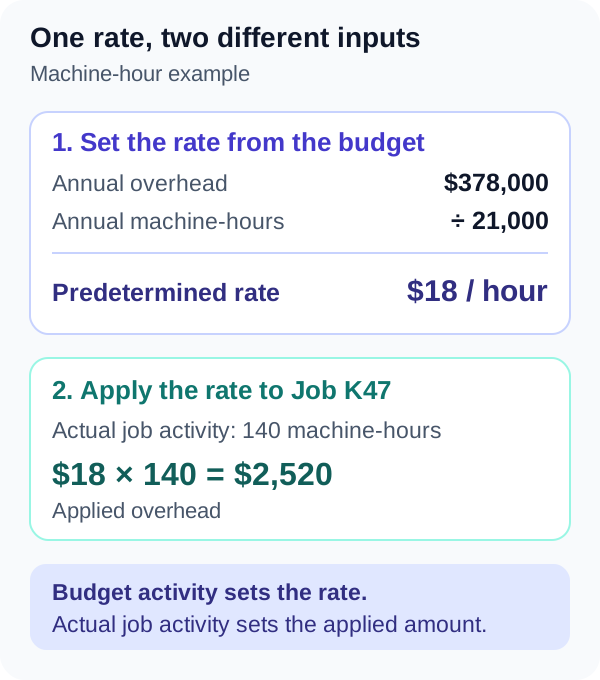
Predetermined overhead rate = budgeted manufacturing overhead ÷ budgeted activity. Multiply that rate by a job's actual use of the same activity base. An $18 machine-hour rate assigns $2,520 to a job using 140 hours.
Reviewed . Original CPAPass exercises.
1. Set the rate before applying overhead
Assume one plantwide manufacturing-overhead pool, a machine-hour base, and a rate held constant for the year. Direct materials and direct labor are traced at actual cost. This is normal job-order costing.
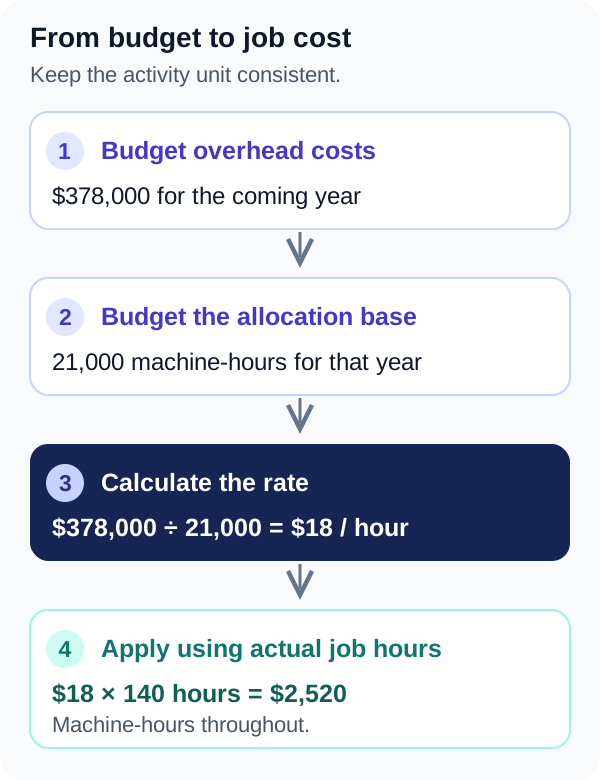
The manufacturer budgets $378,000 of factory overhead and 21,000 machine hours for the same year: $378,000 ÷ 21,000 = $18 per machine hour. Factory rent and factory indirect labor belong in overhead; selling costs do not belong in this manufacturing pool.
2. Apply the rate to Job K47
Job K47 uses 140 machine hours, $3,400 of direct materials, and $2,100 of direct labor. Its machine hours determine applied overhead; its labor dollars do not. Add the three assigned cost components once each to obtain the total job cost.
| Cost | Basis | Amount |
|---|---|---|
| Direct materials | Direct | $3,400 |
| Direct labor | Direct | $2,100 |
| Applied overhead | 140 hours × $18 | $2,520 |
| Total job cost | Total | $8,020 |
Quick check: Another job uses 25 machine hours at this rate. How much overhead is applied?
Check the applied overhead
$450: 25 × $18. This assigns overhead to production; it does not mean the job triggered a separate $450 cash payment.
3. Compare actual overhead with applied overhead
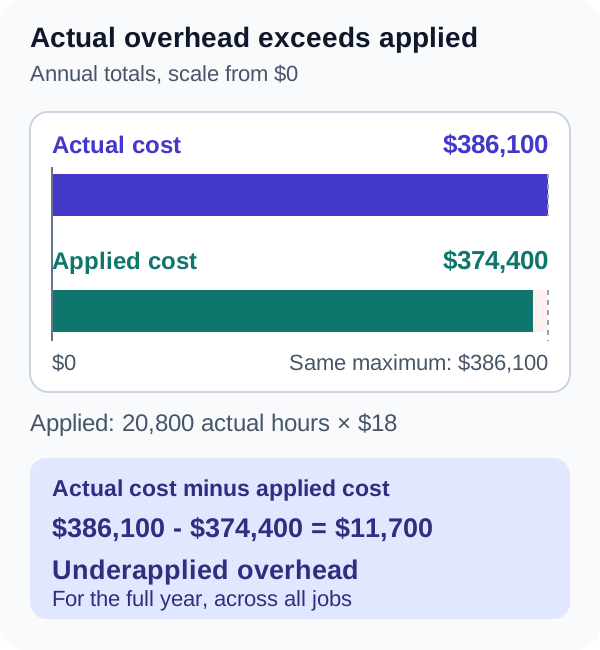
At year-end, actual factory overhead is $386,100, and all jobs used 20,800 machine hours. Keep the original $18 rate when calculating overhead applied during this same year. This period-wide activity includes every job using the pool, rather than only Job K47 or its machine hours.
| Measure | Calculation | Amount |
|---|---|---|
| Applied overhead | 20,800 × $18 | $374,400 |
| Actual overhead | Recorded | $386,100 |
| Underapplied overhead | Actual - applied | $11,700 |
Actual exceeds applied, so too little overhead was assigned. If applied exceeded actual, overhead would be overapplied. Identifying this difference does not determine its final accounting disposition.
4. Keep the inputs in their proper roles
Check the cost pool, budget inputs, activity unit, and comparison. The difference alone does not explain why actual and applied overhead diverged.
| Check | Use | Avoid |
|---|---|---|
| Cost pool | Manufacturing overhead. | Including selling costs. |
| Set the rate | Budgeted costs and activity. | Substituting actual overhead. |
| Apply the rate | Actual job activity, matching units. | Using the wrong activity base. |
| Compare totals | Actual versus applied overhead. | Comparing actual with the budget. |
5. Try an original question
A different manufacturer uses one predetermined rate based on direct labor hours. The rate remains unchanged during the year.
| Input | Budget | Actual |
|---|---|---|
| Manufacturing overhead | $264,000 | $286,000 |
| Direct labor hours | 22,000 | 20,000 |
Job M26 uses 75 direct labor hours and 50 machine hours.
How much overhead is applied to Job M26?
- A. $600
- B. $900
- C. $975
- D. $1,072.50
Reveal the answer and explanation
B. $900. Budgeted $264,000 ÷ 22,000 hours = $12 per direct labor hour. Apply $12 × 75 hours.
A uses 50 machine hours with a labor-hour rate. C substitutes actual overhead: $286,000 ÷ 22,000 × 75 = $975. D uses an actual rate: $286,000 ÷ 20,000 × 75 = $1,072.50.
Repeat the three checks
- Set the rate from matching budget inputs.
- Apply it to actual job activity.
- Compare actual and applied overhead.
Common overhead questions
Why use budgeted activity to set the rate?
The predetermined rate is established before actual totals are known. Use budgeted overhead and budgeted activity for the same period.
Which activity applies overhead to a job?
Use the actual quantity of the selected base. Machine hours and direct labor hours cannot be substituted for one another.
Is applied overhead a cash payment?
No. Application assigns overhead cost to production. Actual factory costs are recorded separately.
Does underapplied overhead mean overspending?
Not necessarily. Applied overhead also depends on actual activity. The actual-minus-applied balance alone does not identify its cause.
Related BAR study
- Activity-based costingAllocate costs using multiple activity pools.
- Standard-cost variancesStudy price and quantity decomposition.
- BAR section overviewPlan your broader section study.
Scope and sources
BAR7 names job-order costing. Predetermined rates are not separately named; this BAR connection is an educational inference.