Gross Profit Method for FAR: Inventory Estimate and Practice
Quick answer
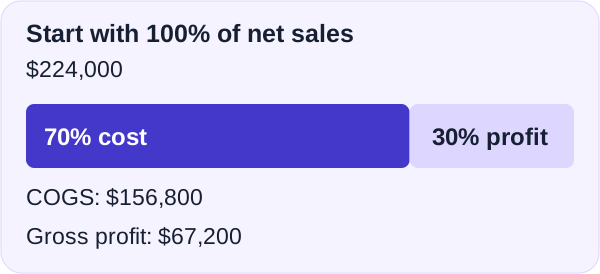
The gross profit method estimates ending inventory at cost: subtract estimated cost of goods sold from goods available at cost. When gross profit is 30% of sales, estimated COGS is 70% of sales. For destroyed inventory, subtract undamaged survivors at cost from the estimated inventory immediately before the event.
Reviewed . Original CPAPass exercises.
1. Read the rate and label the inputs
Marlow Supply needs an inventory estimate after a fire prevents a complete count. Its records through the fire date show:
| Given | Amount |
|---|---|
| Beginning inventory at cost | $46,800 |
| Net purchases at cost | $141,200 |
| Net sales | $224,000 |
| Gross profit margin on sales | 30% |
Assume the records cover the same merchandise pool and period, the normal margin remains appropriate, and there was no earlier shrinkage or obsolescence. Net purchases already include the relevant acquisition adjustments. A markup percentage based on cost cannot be substituted directly for a margin based on sales.
2. Estimate what was still on hand
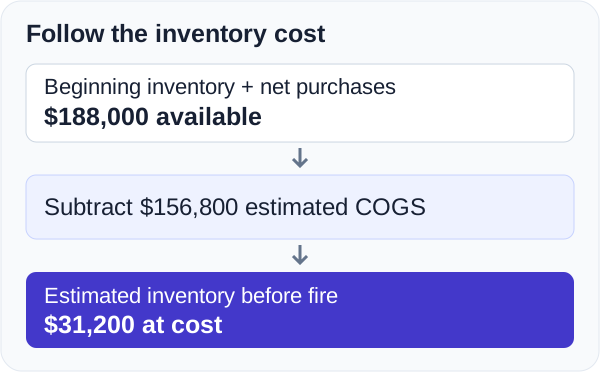
Calculate estimated cost of goods sold first. Subtract that cost, rather than sales revenue, from the inventory cost available. This first estimate includes both the goods that survived and those destroyed. It answers what should have remained before the fire, so keep the survivor deduction for the next step.
| Calculation | Result |
|---|---|
| Goods available: $46,800 + $141,200 | $188,000 |
| Estimated gross profit: $224,000 × 30% | $67,200 |
| Estimated COGS: $224,000 × 70% | $156,800 |
| Pre-fire inventory: $188,000 - $156,800 | $31,200 |
Quick check: A separate store has $18,000 net sales and a 30% gross profit margin on sales. What is estimated COGS?
Check the cost of goods sold
$12,600. Multiply $18,000 by 70%. The other $5,400 is estimated gross profit.
3. Separate surviving goods from destroyed goods
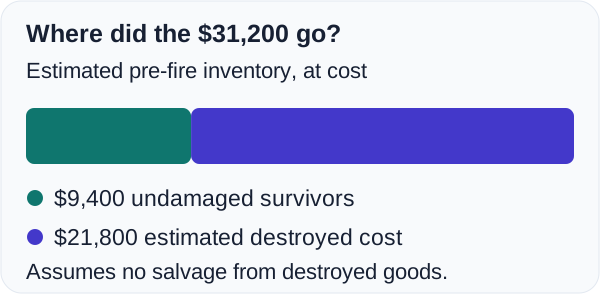
Marlow identifies undamaged inventory costing $9,400. Assume all other unsold goods were completely destroyed, with no salvage value.
| Inventory at cost | Amount |
|---|---|
| Estimated before the fire | $31,200 |
| Less undamaged goods remaining | ($9,400) |
| Estimated destroyed inventory | $21,800 |
This estimates destroyed inventory cost. It does not calculate an insurance settlement or supply a complete loss journal entry.
4. Catch the common input mistakes
| Input | Mistake | Correction |
|---|---|---|
| Cost rate | Use the gross profit rate. | Use 100% minus the margin on sales. |
| Goods available | Subtract sales revenue. | Subtract estimated COGS. |
| Surviving goods | Subtract their selling price. | Use their undamaged cost. |
| Evidence | Treat the estimate as a count. | Check the margin and record assumptions. |
Changing prices, product mix, or unrecorded losses can weaken the estimate. A reliable physical count provides different evidence; this method does not turn an assumed margin into an observed quantity.
5. Try an original FAR-style question
A separate merchant reports beginning inventory of $34,200, net purchases of $105,800, and net sales of $156,000 through a fire date. Normal gross profit is 25% of sales. Undamaged goods costing $7,000 remain. Apply the same assumptions as above. What is the estimated cost of destroyed inventory?
- A. $23,000
- B. $16,000
- C. $94,000
- D. $117,000
Reveal the answer and explanations
B. $16,000. Goods available are $140,000. Estimated COGS is $156,000 × 75% = $117,000. Estimated pre-fire inventory is $23,000; subtract $7,000 of survivors.
- A omits the surviving inventory.
- C uses $39,000 gross profit as COGS: $140,000 - $39,000 - $7,000.
- D reports estimated COGS instead of destroyed inventory.
Check your result
- Use the sales-based margin.
- Estimate inventory at cost.
- Subtract undamaged survivors at cost.
Common inventory-estimate questions
Why subtract 70% of sales?
A 30% margin on sales leaves 70% as estimated cost. The margin identifies profit; its complement identifies COGS.
Can I use a markup on cost directly?
No. Markup on cost and margin on sales use different denominators. Establish the sales-based margin before using this formula.
Is estimated inventory the fire loss?
Only if all estimated unsold inventory was destroyed. Here, undamaged survivors must be removed from the pre-fire estimate.
Does this replace a verified physical count?
No. It estimates inventory from records and an assumed margin; it does not establish the quantities actually present.
Related FAR study
- Physical-count adjustmentsReconcile a verified count to the ledger.
- LIFO versus FIFOCompare inventory cost-flow assumptions.
- FAR study topicsPlan your wider FAR study.
Scope and sources
FAR12 covers inventory calculations but does not name this method separately. This FAR connection is an educational inference, not an exam-frequency claim. These original examples are not AICPA questions.