Inventory Errors: Follow the Effect Across Two Years
Quick answer
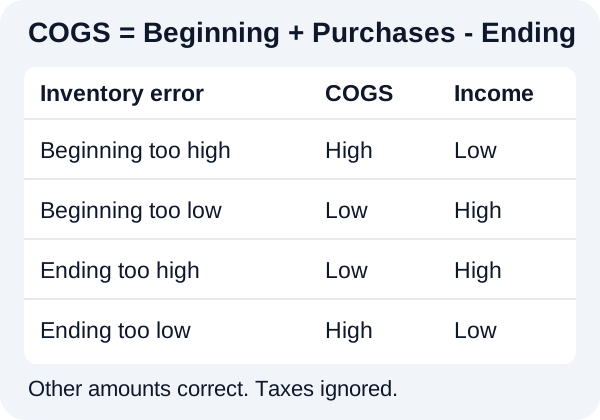
Ending inventory overstated means COGS understated and income overstated, if other amounts are correct. Beginning inventory overstated has the opposite effect. Understatements reverse each direction.
Reviewed . Original CPAPass exercises.
1. Use the equation before the shortcut
COGS = beginning inventory + net purchases - ending inventory. Beginning inventory adds cost; ending inventory removes unsold cost. That difference explains the signs.
Assume periodic merchandise inventory, accurate purchases, revenue and other expenses, and ignore income taxes. Here, “income” means net income under that no-tax assumption.
2. Worked example: calculate the first-year error
Cedar Supply reports ending inventory of $36,600 instead of $31,800. All other Year 1 amounts are correct:
| Amount | Correct | Reported |
|---|---|---|
| Beginning inventory | $24,600 | $24,600 |
| Net purchases | $138,400 | $138,400 |
| Ending inventory | $31,800 | $36,600 |
| COGS | $131,200 | $126,400 |
COGS is understated $4,800, so income is overstated $4,800. The inventory asset and ending retained earnings are also overstated $4,800, assuming no other errors.
Quick check: Beginning inventory is understated $2,700; ending inventory is correct. What happens to income?
Check the income effect
Income is overstated $2,700. Too little beginning cost makes COGS too low by $2,700.
3. Carry the balance into Year 2
Now assume no correction was recorded and Year 2 ending inventory is accurate. The incorrect $36,600 becomes reported beginning inventory:
| Amount | Correct | Reported |
|---|---|---|
| Beginning inventory | $31,800 | $36,600 |
| Net purchases | $149,700 | $149,700 |
| Ending inventory | $27,900 | $27,900 |
| COGS | $153,600 | $158,400 |
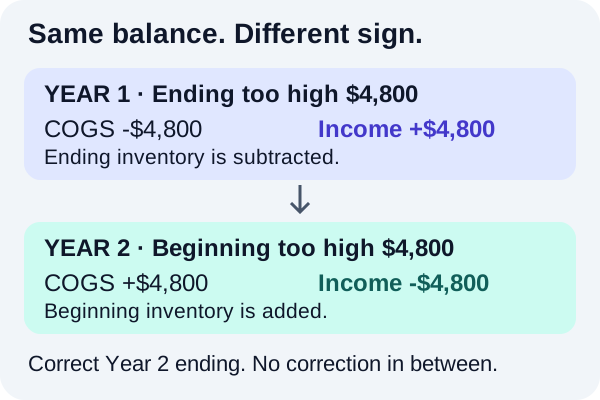
Year 2 COGS is overstated $4,800 and income is understated $4,800. The same balance now sits on the adding side of the equation.
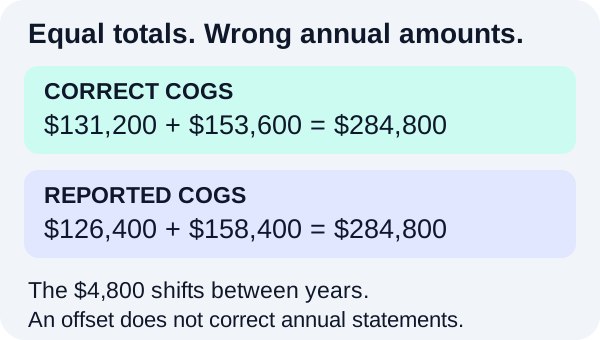
Combined COGS is $284,800 either way. The income errors offset, but each year’s reported income is still wrong. At Year 2 end, inventory and cumulative retained earnings are correct under these assumptions.
4. Check the limits of the offset
An offset is conditional. A wrong Year 2 ending balance, misrecorded purchases, or a correction during Year 2 changes the analysis. A goods-in-transit error may affect purchases too.
Do not use a two-year offset as permission to ignore a discovered error. Determine the affected annual amounts first; correction and reporting requirements need separate analysis.
5. Try an original FAR-style question
Beginning inventory is overstated $3,600 and ending inventory is understated $1,400. Purchases, revenue and other expenses are correct. Ignore taxes. How is net income misstated?
- A. Understated $2,200
- B. Understated $5,000
- C. Overstated $5,000
- D. Understated $1,400
Reveal the answer and explanations
B is correct. COGS error = $3,600 - (-$1,400) = +$5,000. Too much expense means income is understated $5,000.
- A incorrectly nets the two error magnitudes; both increase COGS.
- C gives the COGS overstatement instead of the income understatement.
- D includes only the ending error and ignores beginning inventory.
Check your reasoning
- Identify which inventory balance is wrong.
- Use reported minus correct for each error.
- Check assumptions before claiming an offset.
Common inventory-error questions
Why does ending inventory affect next year?
The closing balance becomes the next opening balance, where it adds to COGS instead of being subtracted.
Do all inventory errors offset in two years?
No. This example requires accurate Year2 ending inventory, no other errors and no intervening correction.
What if both beginning and ending are wrong?
Use signed errors: COGS error equals beginning error minus ending error, assuming purchases are correct.
Does an offset fix the prior annual statements?
No. A correct combined total does not make the original annual amounts correct.
Related FAR study
- Inventory count adjustmentsReconcile the count and ledger.
- Weighted average inventoryCalculate a periodic cost allocation.
- FAR study topicsChoose your next FAR topic.
Scope and sources
The FAR connection is an educational inference from inventory tasks in the January 2026 Blueprint. Educational sources: Walther and AccountingCoach (undated), OpenStax (2019). Reviewed September 24, 2026. Original CPAPass exercises, not AICPA questions. Restatement procedures, correction entries and valuation methods are outside this lesson.